


“None of us’ll be able to help you, son.”
You know this story’s shape. The main character’s quandary is a binary choice:
Do as told by authorities and face violence from their in-group.
Shirk the order and be squashed by the societal boot.
Double bind.
No win.
And those are only the external threats.
Whatever they choose, the moral fallout will shadow their personal integrity for the rest of their lives.
Last week, we discussed my father’s childhood abandonment and abuse. We covered 12-year-old Mack’s escape to a vast swamp (the Everglades), his subsequent illness, and his eventual unofficial adoption by an unusual couple. You also discovered his resilient recovery, his academic and athletic achievements, his impulsive choice to join the Army Reserve, and how his unit unexpectedly deployed to West Germany during the Korean Conflict. You read about his idyllic few years as a valued group member in the Army, and the abrupt end of that respite when President Truman’s 1948 executive order on racial integration of the federal government steamrolled Army resistance. This caught up with Mack’s laggardly unit. As personnel clerk and the youngest guy in his all-Caucasian Signal Corps company (a renegade holdout), he faced a grave, no-win predicament.
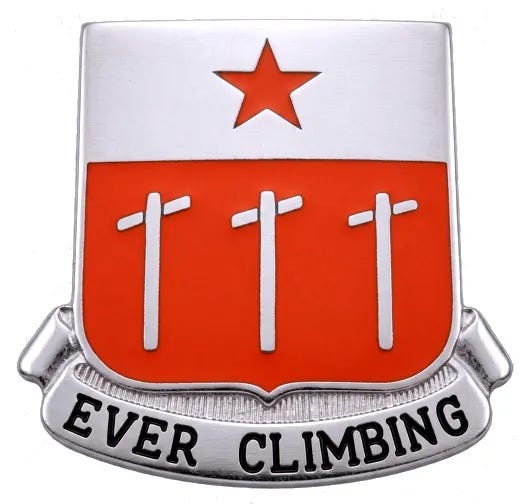
That recap brings us to West Germany in October 1953, to a unit tasked with stringing communications cables through the Alps. There, after three years of enjoyable work and leisure activities, Mack found himself abandoned again. The 315th Signal Battalion’s executive officer, a white major charged with overseeing the final, uncompromised racial integration of the battalion, ordered Mack to sign him out on leave through the implementation deadline. Company B’s first sergeant engineered his own demotion and a stint in the stockade (for gambling and military script trafficking) rather than be party to implementing the presidential order.
The 315th SCB descended from an all-Black World War II unit and was integrated on paper but divided into separate Black and White companies in reality.
You’ll recall Mack’s supposed buddies threatened him with harm beyond any he could imagine if he obeyed the Army’s order.
Obedience would make him, in a phrase still redolent on social media, a traitor to his race.
What choice did young Mack make?
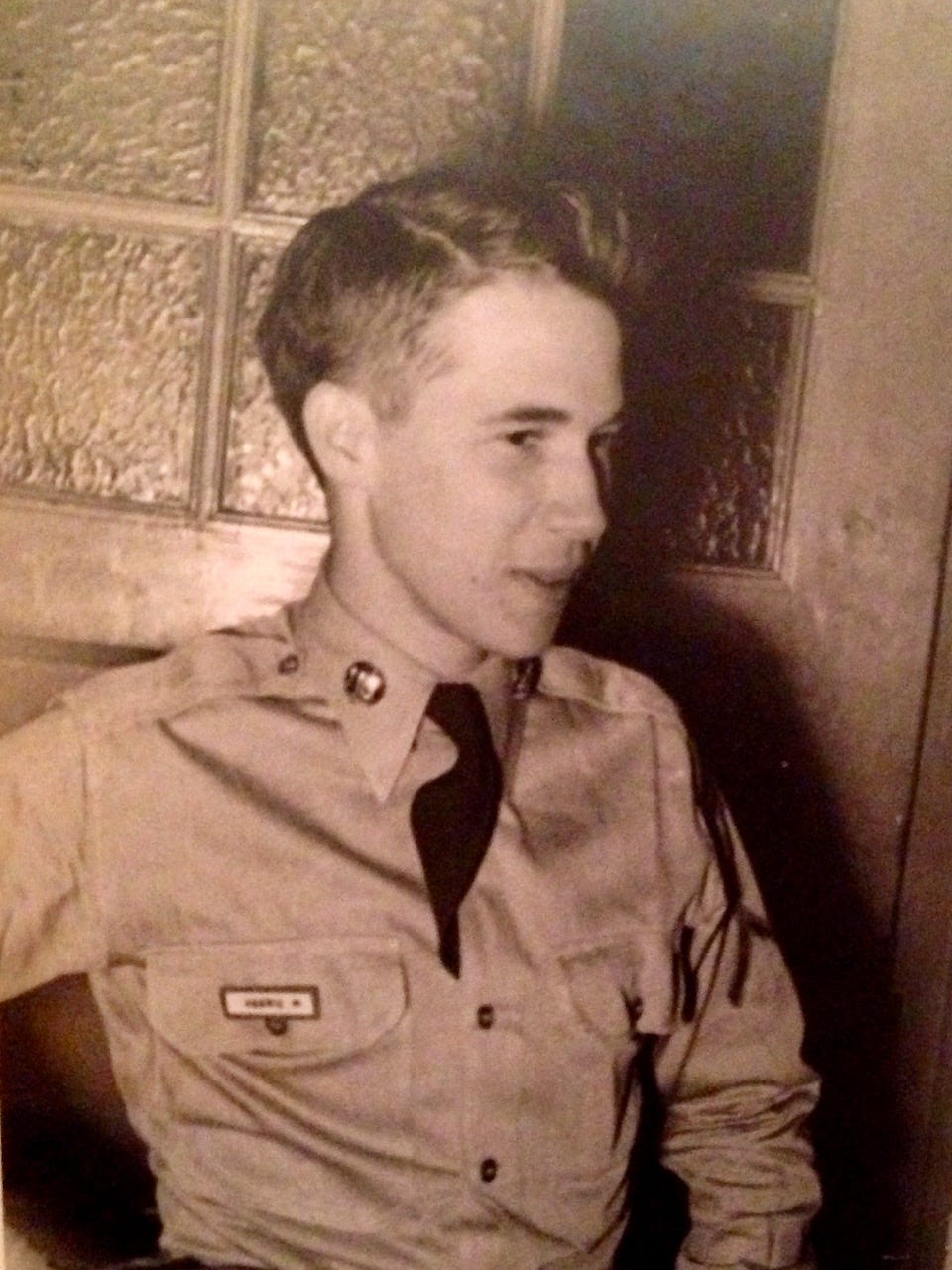
Step into his spit-shined Oxfords. You’re damned either way. The officer tasked with overseeing the shuffle of white and black cards into a single deck has gone on leave. A hardier, white supremacist replaces your immediate boss, the first sergeant. This man tells you if you bring him any compliance paperwork to sign, “None of us’ll be able to help you, son.”
If you are an intelligent survivor like Mack, you return to the tactics that worked for you in earlier no-win dilemmas:
Imagine a third way.
Don’t let others or circumstances frame your entire option set.
Leave abusive circumstances by any means available.
Turn to allies who offer any meaningful options.
Friendship as Refuge

"We had run clean beside the island... The hills ran up clear and green... and the sight of them, after so long at sea, was a great relief to the eyes." — Robert Louis Stevenson, Treasure Island (one of Mack’s favorite books)
Mack made friends easily and with little apparent strategy or deliberate effort. Some months before his job dilemma, while on leave, he had befriended two Dutch brothers and their sister in Amsterdam. He and the sister had been close enough that he referred to her, years later, as his Dutch girlfriend. I don’t recall if he ever shared the details of how he contacted them, but he let them know he had a significant number of vacation days and would like to visit them. They invited him right away.
Being the personnel clerk, he controlled leave slips. It was easy enough to get the new first sergeant to sign a few before starting his own bit of leave time, and Mack simply used one of those for himself. Destination? The Netherlands. Simple audacity. He figured he would get to his friends’ home, and then the next step would become clear. Else, he’d be tracked down by military police (MP), arrested, court-martialed, and safely ensconced in the stockade, like his original first sergeant. Not the preferred conclusion to his military service, but notably better than being maimed or murdered by his unit mates.
Shortly after arriving in Amsterdam, Mack learned the family was preparing to depart for their other home in Aruba, a Dutch Caribbean island in the Leeward Antilles, close to Venezuela. They asked him to come along, to which he agreed.
Mack reported that time as peaceful, relaxing, and fun. That would change when he returned to Amsterdam with the family.
Cashing the Last Chip
Mack’s luck held for several days after returning to the Netherlands. Then the doorbell of the family’s grachtenpand (canal house) rang. On alert, Mack listened nervously. One of the family members came to him.
“There are soldiers at the door. They want to talk to you.”
He knew the jig was up and said hasty goodbyes. As soon as he stepped outside, two MPs arrested him, ordered him into the back of their jeep and drove directly to the 4th Signal Group’s Headquarters at Campbell Barracks in Heidelberg. There, the group commander, a colonel, berated Mack for going AWOL. Mack braced to be read a confinement order. Instead, after a long ‘butt-chewing’, the colonel told him the commanding general was furious but also grateful for Mack’s nearly four years of honorable service, and especially grateful for his contributions to the command basketball team’s success. With that, the colonel handed Mack over to a personnel NCO who had him sign discharge papers. Before he had time to read the document, the MPs whisked him to the train station, handed him a one-way ticket to Bremerhaven, and an envelope. One MP accompanied him.
In the envelope, Mack found his remaining pay and another one-way ticket, in the form of an official travel order, for the next troop ship departing for the USA. The MP handed him off to an NCO, who ushered him up the gangway.
The Gump Effect
Everything about Mack’s natural presentation, including his physical posture, gestures, facial expressions, manner of approach, and vocal quality, bypassed most people’s social defenses. It was a sort of sleight of hand. Social street magic.
One moment he was some figure outside the other person’s me/us space. Their senses informed them, semiconsciously, that he was there, but something in the non-threatening way he approached did not trigger any major alarms. And then he would be inside their safe space. Just like that. And they still felt safe. It felt more like a materialization than an intrusion.
I’ll leave you with a fictional, yet accurate depiction of a spontaneous first encounter with Mack.
You’ve been Macked: A First-Contact Scenario
You are a thirty-something man exiting a restaurant with your wife and six-year-old son. The Southern food lived up to its description. You ate a little too much and could have skipped that piece of cornbread.
A fellow exits ahead of you. He had been talking to the greeter, who still has a big grin on her face. Her nametag says, ‘Latasha.’ They must know each other.
He holds the door for you. His face is open and relaxed. He is smiling. His gaze catches yours.
You gut check. Safe?
He seems to recognize you and be delighted to see you. Looks harmless enough. Your avoidance sensors are not pinging. His openness feels genuine. Probably a gabber, and Jemma wants to get home. Better slip on past.
There’s a second of worry that you’ve met him but don’t recall it, or his name.
He says something about how good the food is at this place and, “Only the most discerning taste buds come here.” He’s rubbing his belly.
You relax a bit. Before you catch yourself, you are smiling back, really smiling, not presenting.
He says something complimentary about your shoes and then makes a silly face at your Leo, who giggles.
He comments on the sports team, whose emblem is on your shirt. They’ve had a rough season, he says, but praises their grit. He mentions the point guard’s obvious talent, which you’ve also noted. He knows about those terrible calls from the refs. Knows the new coach hasn’t found his rhythm yet.
Leo tugs your hand. You lean down. He says the man is funny. You say, “Get ready to say, ‘Nice to meet you, sir,’ because we’re about to go.”
The man points at your cap, the one with the embroidered bass leaping from the water. He requests your advice, then offers his on the best fishing spots this week.
Ten minutes later, you are engaged in pleasant conversation when it occurs to you that you don’t know this man’s name or, really, much at all about him. Why, then, does he feel so familiar? Why have you so readily fallen into conversation with him? And isn’t it nice how Leo was whining about spilling his dessert on the restaurant’s carpet, but now is happily in his own parallel conversation with the man?
Life made you cautious. You’re street smart. That’s it, of course. You are an excellent judge of others, and you simply pegged him as safe. He’s a little like you.
Jemma nudges you. Oh, right. She has a bag of leftovers that needs to go in the fridge.
“Well, I’ve enjoyed chatting with you,” you say, extending your hand. “I’m Walter. Didn’t catch your name.”
“Mack,” he tells you. “Like the trucks.” He points to his cap’s embroidered bulldog, the truck brand’s mascot.
He apologizes to Jemma for holding you up, but then he invites you to join him and his fishing buddy this weekend at the lake. You accept the receipt he hands you, with his phone number and full name inked on the back. He’s a preacher. Should have known. Ha. He says they’ll be done fishing well before noon, in case you’re worried about that forecast.
Another gentle nudge from behind, and Jemma says, “Maybe another time, Mr. Mack. We have a commitment that day.”
You’d forgotten that the Bentleys are coming over for a cookout.
“Why don’t you come over?” she continues. “Bring your family. Three-ish.” She nods toward a woman and three kids standing by a Chevy. “And if you’re right about where the fish will be, bring some over for the griddle. Nice meeting you, Mr. Mack.”
She writes your name, address, and phone number on your receipt slip and hands it to him.
What just happened? Jemma’s never invited strangers over before.
It’s a safe offer. He’ll be tired from fishing, cleaning his catch, and putting his gear away. Besides, when he looks up our address, he won’t want to bring his tidy family to our neighborhood of blue-collar workers and down-and-outs.
He laughs, his eyes disappearing in a squint. “Count on it.”
You head for your car and he toward his, but then he veers toward the other side of the parking lot, where he says something to a couple of ratty-looking teen boys, who laugh and return his high-fives. Now they are chatting, reenacting basketball plays, it seems. They must know him. His family does not look surprised.